
Meditation is not for self-help. It’s for mystics.
April 13, 2026 | 9 Comments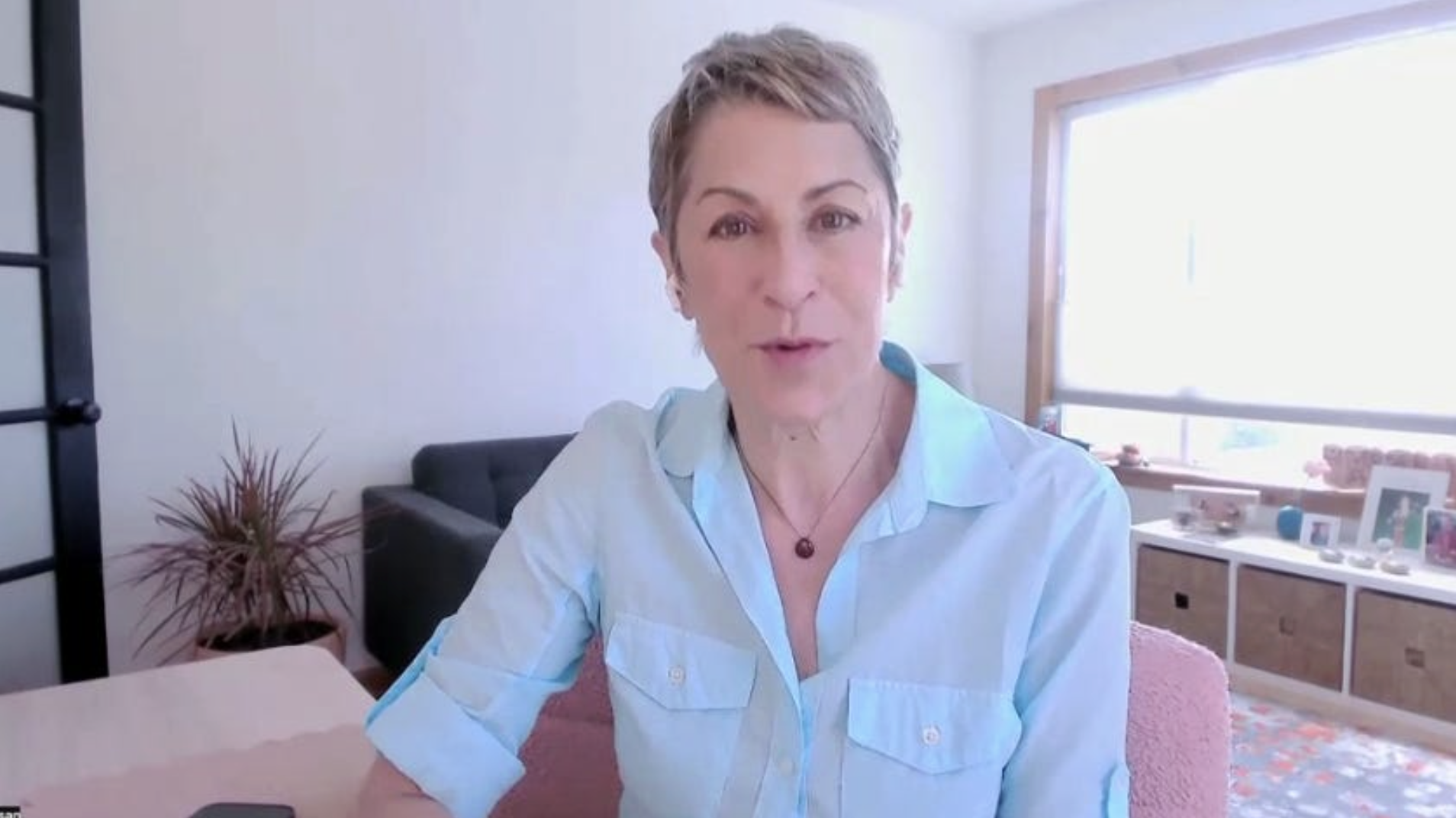
Hello Wonderful Open Heart Project,
I am thrilled and nauseated and delighted to say that I’ve finished the manuscript for my next book. Thrilled, because it was created to honor my extraordinary teachers of the last three decades. Nauseated, because what writer isn’t. Delighted because it’s done. It should be out in the next few months. It will be self-published in print, e-book, and audiobook formats. (I LOVE SELF-PUBLISHING.)
My hope with this work is to remind us that meditation is not about stress-reduction or mastery particularly. It’s about waking up to the vast mystery that we consistently mistake for “me.” I think that’s an okay way to say it. But let me refer you to the words of Samuel Bercholz, publisher and teacher extraordinaire. He has published many great teachers, including Pema Chödrön and many Rinpoches and Roshis, so his words mean the world to me. Sam founded Shambhala Publications, the greatest dharma book publisher in the world.
He said:
If you’re looking for a book that will make you calmer, more efficient, and slightly better at meetings…keep walking.
Inexplicable Magic is about what meditation actually does: it messes with your plans, softens your defenses, and introduces you to a kind of intelligence you don’t control.
Susan Piver isn’t selling mindfulness as a lifestyle accessory. She’s pointing to the real thing—lineage, mystery, heartbreak, and the strange fact that what you’re looking for doesn’t come from you… it comes to you.
Not self-improvement.
Not optimization.
Something far more interesting.
—Samuel Bercholz, author of Rude Awakenings, An Unconventional Guide to the Buddhist Path and A Guided Tour of Hell
Here are the opening paragraphs of the introduction:
Picture this: Siddhartha Gautama (AKA Buddha Shakyamuni) has just attained complete enlightenment. After years of searching, fasting, meditating, and contemplating, getting closer and closer but never quite realizing nirvana, he decides to take a seat under a tree (now called the bodhi tree) and not rise until he pierces the veil of delusion. Which he does. He wakes up.
He rejoins his spiritual community to share with them what he discovered. There are many accounts of what he said, and those accounts have created the foundation of Buddhist thought throughout the world. He talks about the Four Noble Truths. He discusses the Middle Way. He teaches meditation. He does not say, “I’ve discovered a life hack, y’all” or “Meditation will make you a better leader” or “Trouble sleeping? This will help!” He makes no mention of cortisol, nor does he discuss ways to improve mental processes. Rather, I imagine he says something like,
“Please try to wake up from delusion and then help others to do so. We exist within a great expanse without center or fringe, so simply open up—to yourself, others, animals, trees, the planet, everything. Meditation practice teaches just this.”
(I’m guessing here, as you may realize.)
The pith of the Buddha’s teachings is not consonant with today’s meditation trends and this short book offers a counter-reminder that this ancient and profound and absurdly simple practice has a much more soulful context. It is a practice which breaks your heart open—first to yourself, then to others, then to this world, and then, at some point, to the great bliss of abiding in the true nature. Heartbreak is among the essential seed syllables. (More on that later.)
It is wonderful, of course, that in recent years “mindfulness” has become a thing. It’s important to know how to focus and pay attention in this world of surging inputs. However, it seems that something has gone awry. Rather than a path to wisdom, compassion, and bravery, mindfulness has become synonymous with stress-reduction, inner peace, and mastery. A short glance at search engine results for “mindful” reveals the mindful leader, the mindful parent, mindful sleep, football, marriage, communication, even mocktails. (Indeed, there is a book called “The Mindful Mocktail: Delicious, Nutritious Non-Alcoholic Drinks to Make at Home.” Bless!)
When it comes to meditation as a spiritual practice, mindfulness is definitely part of it. But it is only half of what goes on. I posit that this mysterious other half is where the magic lies. When we sit down to meditate, we establish an uplifted posture, allow our attention to rest on the wave of breath, and let thoughts come and go (which they most certainly will do whether we “allow” them to or not). If it happens one thousand times that your attention becomes absorbed in thought rather than breath, you notice this, let go, come back, and begin again one thousand times. (See Appendix A for full instruction.) This is called mindfulness. You rest your mind on an object of your choosing (in this case, breath) and whenever you space out, you come back. That’s all there is to it. In this way, you cultivate focus, precision, concentration, and…mindfulness. It’s a very great thing but it really has nothing to do with parenting or mocktails. Though your increased mindfulness may enhance your capacity for patience with little ones or making a baller Cucumber-Kombucha Margarita (which actually sounds pretty good), that is not its particular purpose. It’s simply a skill.
Mindfulness is the ground, not the fruition.
The other quality that meditation rouses is “awareness.” This is where it gets very interesting. Meditators the world over and throughout time have reported very similar results. Sense perceptions become more vibrant. Life patterns are intuited. Hearts soften. Insights arise. In other words, awareness expands. You see more, feel more, know more. (Riddle me this: how does this happen from sitting there doing nothing? I really hope no one knows because not-knowing preserves the impenetrable mystery—and one can have ultimate confidence only in what cannot be deconstructed.)
Mindfulness can be worked at. You can read books about it, try harder, hone it more and more deeply. Awareness, however, cannot be worked at, only allowed. In meditation practice, mindfulness and awareness are inseparable. They exist as a single enso.
Now we arrive at the secret gate. No matter how smart, learned, well-read, or well-intended you are, you cannot compel what is most desirable—love, wisdom, creative self-expression, innovation—to come to you. These are things that we receive. They are beyond conventional thought. Otherwise we’d all be running around fully loving and wise, spewing great artworks hither and yon. But it just doesn’t work that way. I mean, it can’t be a coincidence that some of the worlds’ greatest insights and ideas have come to people who are sleeping, showering, or walking.
Which brings me to what is probably the central point of this work on meditation as a spiritual practice:
What you seek does not come from you. It comes to you.
When we employ our meditation practice for conventional (albeit noble) aims like leading, parenting, sleeping, quelling anxiety and crafting mocktails, various studies tell us it will help. If you want these things, you could learn to meditate. But if you want to discover who you really are, deepen your capacity for intimacy, become liberated from suffering, and leap tall buildings in order to be of the greatest possible benefit to all sentient beings, you could release your agenda for this practice. Over and over. While the practice has the capacity to help you sleep better and so on, it is also custom-made for demolishing self-concept to reveal a much bigger self than you may ever have dreamed of. As it does, it cultivates the three qualities of the awakened mind, which far exceed anything you might imagine. These three qualities—remarked upon by great masters of the ages—are wisdom, compassion, and power (or bravery, if you prefer). These are the actual consequences of practice and, as such, meditation once again reveals itself as so much more than self-improvement.
Thanks for reading and stay tuned for more.
Love,
Susan
categorized in: books, dharma, magic, meditation
9 Comments
Thank you, Susan, for being you and for all your efforts. You offer me (and many others) words for my experiences and insights I cannot ( and do not have to) put into words. I started to meditate and study the buddhist dharma in 2003 and keep on doing it. It became my way of being in the world, with all its challenges and delights. I am thankful for my teachers, who keep on showing me the way. You are one of them.
Thank you, Susan, you have he skill and insight and gift to delve into ,and state profundity in clear simple terms. Gratitude to you
You are a wonderful writer and a terrific teacher. I have loved your books in the past and I’m sure this one will be no different!
Looking forward to adding this next book to my collection of your writings. Sam’s words are perfect.
In gratitude for all you do to teach us along the path.
Thank you for your generosity. In giving, we receive.
“The Zen Circle, also known as an ensō, is a symbol of enlightenment, strength, elegance, and emptiness. Originating from Japan, Zen Circle Calligraphy Art embodies the beauty of Zen Buddhist philosophy and Japanese aesthetics. Each Zen Circle is an expression of its creator’s character and the moment of creation, captured in a brief, continuous period of drawing.”
–Plum Village
Thank you Susan, for this delicious sample! I look forward to the whole meal deal when it comes out – your writing hits home. You are a terrific teacher – immersed in your subject, student focused, and openhearted – I’m speaking from personal experience because I was in your Spring 2020 Meditation Instructor course. You rock! I wish you all the best with this book.
Merci. Your writings always open new ways of seeing/ thinking for me.🌷🌷🌷
Oh my goodness, wow! Your writing is profound. It’s immensely and vitally important how you’ve, so precisely, articulated the many layers of spiritual evolution that can unfold for us western practitioners.
Thank you very, very much, Susan.
Here’s to leaping tall buildings! Not that this is my agenda….no agenda….simply sit and breathe 🙂
Thanks, Susan.