
Vy Ton
Forum Replies Created
-
AuthorPosts
-
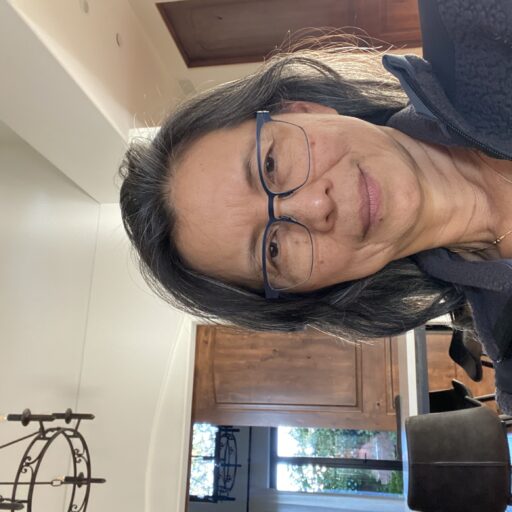 Vy TonParticipant
I think I am mostly prepared. I understand the practice and have a general order and wording. I have to make sure to fine-tune some of the words and then will need to put in a lot of time and repetition. I would say that practice is what is most lacking for me. I hope that the more I do it, the more I will be able to give instructions in a way that sounds more natural rather than rehearsed or scripted.
Vy TonParticipantI completely agree with everything you wrote, especially about how much more we have to learn and how much more we can improve to be better listeners!
Vy TonParticipantAs a long-time yoga student, I have admired and felt close to a lot of my teachers without actually having had any interaction with them outside of class. As a student, it is possible to feel connected to teachers through the way they teach, their genuineness and encouragement, their clarity and professionalism.
As a yoga teacher, I try to emulate the qualities that I admire in my teachers and I try to set very clear intentions and boundaries for my own behavior. I want students to connect with their yoga experience rather than necessarily to like me as the teacher. I try to model self-compassion and friendliness but I also try to give students a lot of space for their practice. When in doubt, I think it is better to err on the side of being too remote than being too friendly.
I have only ever taken and taught group classes and I wonder if the dynamics would be slightly different if the classes were one-on-one?
Vy TonParticipantI agree that there’s a lot to let steep and return to again and again. I admire your practice, discipline, and holding such high aspirations for yourself.
Vy TonParticipantI completely relate to your challenges of parenthood, menopause and being in a “helper” profession that requires giving of yourself. How interesting that we find easy/challenging the exact opposite Paramitas! Love it.
Vy TonParticipantI feel that I understand patience. Being married, having children and learning meaningful things that are hard have taught me to have patience and to look at things with a long view. My yoga practice became better after I learned to let go of needing immediate outcomes. Connection and change (in the body, in perspective, in relationships etc) take time to build before they can take root.
I find generosity to be a very difficult quality. As war refugees, my family and I faced many years of general uncertainty and financial hardship. I never fully outgrew that deep insecurity and sense of scarcity. I catch myself wanting to hoard (things, emotions, experiences) and then having to reassure myself that I am doing okay and can relax. I would of course prefer to move through life from a position of inner abundance.
Vy TonParticipantI hope you are recovering from your sinus infection. It sounded like you did well despite your illness. I too would like to have more practice in figuring out if/when to talk again after the initial instruction. Like you, I am also grateful to have a lovely group of fellow learners with whom to share and practice.
Vy TonParticipantHi Colin, you did not appear awkward at all when you gave me instruction. You were calm and clear and had the perfect voice to teach meditation. I enjoyed it very much. Thank you.
Vy TonParticipantBefore offering instructions for anything, even for yoga which I have been teaching for 10 years, I always have a slight sense of self-doubt or worry whether I have prepared enough. My challenge is to work on surrendering and trusting: in the practice, in myself and in that the student will get what they need from the practice. (Thank you Susan for this insight). I tried to keep words very simple to settle the body, feel the breath and “notice, let go, return and begin again”. My meditation partner Colin was a calm and experienced practitioner and, as he sat quietly, I sent him friendly and supportive energy and good wishes for his well-being. If Colin had been less calm, I would have felt less confident and would have interjected with more words and instructions which I would not have felt comfortable doing. With one-on-one teaching, the synergy between teacher and student clearly exists. I can understand the importance of holding a grounded and encouraging space that can surely be felt by the student.
Vy TonParticipantHi Nathalie, what a beautiful and philosophical reflection on the topic of lineage.
Vy TonParticipantHi Colin, I could not agree more with the significance of Susan’s teaching being rooted in a lineage that connects back to the teachings of the Buddha and your insight that lineage is “a gift of connection and authenticity” to be taken with great respect.
Vy TonParticipantI teach yoga and the term lineage is very familiar. I appreciated that during teacher-training, we were well-taught in the different branches of yoga asana, how they developed and the important teachers who taught those methods. Even though there is now a proliferation of methods, most are still traceable back to Sri T. Krishnamacharya, the developer of modern yoga.
On a personal level, I inherited Vietnamese cultural values and Catholic rules of behavior from my parents, an emphasis on continual learning from my maternal grandparents, and a sense of aesthetic from my paternal grandparents. Because my family and I fled Vietnam at the end of the war, I also belong to the lineage of immigrants and transplants to the US.
I have tried to learn meditation many times in the past 30 years but the most successful experience was guided by my teachers at the Healing Cultures organization where, for 3 years, we had daily individual practice, monthly online small group meetings and, twice a year, retreats or pilgrimages to bolster community and practice. My teachers believed in the importance of ritual, of setting up a meditation altar and building strong supportive energy at that altar with daily practice and mantras. Their lineages combined Saivism from India and Ninniku Okyu from Northeastern Japan.
I really like the simplicity, silence, and alertness of shamatha vipashyana and hope to one day count myself in that lineage of meditators.
Vy TonParticipantHi Elizabeth, thank you for sharing about your spiritual journey and the insights gained along the way. These great insights sound deep and hard-earned and come from that genuine space of the heart.
Vy TonParticipantHi Octavio, thank you for sharing your thoughtful journey with these two heady concepts. I cannot agree more that things are never that simplistic and that we have much to discover and understand. I appreciate your reminder to remain humble, open and skeptical.
Vy TonParticipantI was born into a Catholic (eternalism) family in the predominantly Confucianist (nihilism) and Mahayana Buddhist country of Vietnam. Growing up in the US, I learned empirical evidence-based science (nihilism) that taught that I can only believe what I can sense and prove. Western education also taught that the mind is supreme, that the body is to be subjugated or ignored (“mind over matter”) and that spiritual matters are best left to the church or family (I highly agree!). I think we all grow up exposed to both ends of the continuum of eternalism and nihilism and it is possible to hold both values at the same time. I believe that the spirit does persist beyond this lifetime but I have doubts since there is no way to currently prove it to be so. Ultimately, I do not think it matters what I believe as long as I live in a way that contributes in a positive way to society. When I was younger, I needed more structure and rules but I am now more comfortable with uncertainty, mystery and magic.
-
AuthorPosts